
This guide covers one event sold to more than one audience: a promoter with a public on-sale and a travel agency selling a reserved allocation of the same seats.
By the end you will have allocated inventory to a sales channel, minted buyer access from your backend, held seats in the agency’s own page, booked them with your own credential, and received a webhook that says which channel made the sale.
The shape of it
One event, ev_9f3a, with 1,000 seats:
- 800 on Public sale;
- 200 assigned to
Travel Agency A.
Both audiences load the same event and the same chart. Selling A-12 through
the agency makes A-12 booked on the public page too, immediately, because
there is only one inventory.
The public page does not call the buyer-access API: it mounts the SDK with
event and publicKey. The following token flow exists only for the agency’s
private allocation (and equally applies to login, presale, invite-only, and
partner audiences).
Agency buyerSigns in and chooses a package
The agency validates its buyer before asking for any SeatLayer access.
Agency backendRequests scoped buyer access
It asks the promoter to open access for this buyer and this agency allocation.
Promoter backendMints the session
The promoter creates an event-and-channel-scoped session and returns only its short-lived token and expiry.
SeatLayerShows and holds the agency allocation
The buyer sees only eligible inventory, then receives an opaque hold ID after selecting seats.
Promoter backendInspects, books, and reconciles
After the agency checkout, the promoter verifies the hold, books it, and receives the channel-attributed webhook.
1. Create the channel
curl -s -X POST "https://api.seatlayer.io/v1/events/ev_9f3a/channels" \
  -H "authorization: Bearer $SEATLAYER_SECRET_KEY" \
  -H "content-type: application/json" \
  -d '{"name": "Travel Agency A", "externalRef": "travel-agency-a", "accessIntent": "server"}'
Set externalRef now. It is the key you will reconcile on later, and it survives
a rename.
2. Allocate the inventory
Read the current assignmentVersion, then apply against it.
curl -s "https://api.seatlayer.io/v1/events/ev_9f3a/channels" \
  -H "authorization: Bearer $SEATLAYER_SECRET_KEY"
curl -s -X POST "https://api.seatlayer.io/v1/events/ev_9f3a/channels/assignments" \
-H "authorization: Bearer $SEATLAYER_SECRET_KEY" \
-H "content-type: application/json" \
-d '{
"targetChannelId": "chn_9f1c",
"labels": ["A-1", "A-2", "A-3"],
"assignmentVersion": 0
}'Read the response’s buckets rather than assuming it did what you asked. Seats in
someone’s checkout and seats already sold are never moved, and they are reported
separately from labels that are not in the event at all. A stale
assignmentVersion moves nothing and returns 409.
Full semantics: apply an allocation.
Optional: give the agency its own price book
Read the channel’s current pricingVersion, then send only the category or tier
prices that differ from the event. Blank/omitted entries inherit event pricing.
curl -s -X PATCH "https://api.seatlayer.io/v1/events/ev_9f3a/channels/chn_9f1c" \
  -H "authorization: Bearer $SEATLAYER_SECRET_KEY" \
  -H "content-type: application/json" \
  -d '{
    "expectedPricingVersion": 0,
    "priceOverrides": [
      { "categoryKey": "standard", "tierId": null, "price": 18 }
    ]
  }'
A stale version returns 409 channel_pricing_conflict and changes nothing. The
agency buyer sees the scoped price automatically, and the hold freezes the same
server-resolved value. Do not send the channel id or its prices from the browser.
3. Check what the agency will actually see
curl -s "https://api.seatlayer.io/v1/events/ev_9f3a/channels/preview?channelIds=chn_9f1c&includePublic=0" \
  -H "authorization: Bearer $SEATLAYER_SECRET_KEY"
This runs the same projection a real buyer session gets, so it is a genuine check and not an approximation. Do it before the partner goes live; it is much cheaper than discovering the allocation was wrong from a buyer.
Give the agency team a read-only allocation report
If the agency’s operations team needs to monitor which seats it owns, open the event’s Performance → Channel view and choose Share partner report. This is separate from buyer access: it shows the agency’s exact assigned seats, current statuses, allocation counts, attributed sales, and an export, but it cannot hold or book inventory.
Revenue is off by default. Set an expiry, copy the one-time URL to the agency, and revoke it when the campaign ends or if it is forwarded unexpectedly. The recipient needs no SeatLayer account, so the URL itself is the credential. For the lifecycle and disclosure rules, see sales channel reports.
Or give the agency its own Partner access
If the agency is a recurring partner that should work its allocation itself, issue its own buyer links inside your limits, return seats it will not use, or request more. Choose Partner access on the channel instead of sharing a report link. You invite one person by email with a role (Viewer, Coordinator, or Partner manager); they accept with their own SeatLayer account and the channel appears as a partner context in their workspace switcher. Nothing about the booking boundary below changes: the agency still cannot book directly, and your backend still owns checkout.
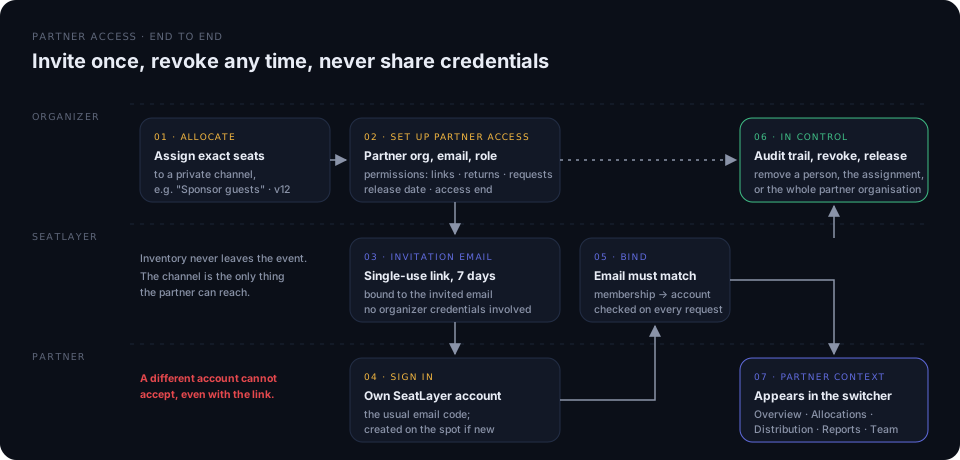
The model, roles, permissions, release date, and revocation rules are on the sales channels page.
4. Mint buyer access, from your backend
The agency’s backend authenticates its own customer, then asks yours. Yours decides, then mints.
The complete private-channel sequence is deliberate:
- The agency verifies the buyer and package entitlement.
- Its backend asks the promoter backend for access; the browser never calls SeatLayer’s secret-key endpoint.
- The promoter backend mints a token scoped to
Travel Agency A, that buyer, and the agency’s exact origin. - The browser receives only the short-lived token and expiry in memory, then
gives them to
buyerAccessTokenProvider. - SeatLayer shows only that allocation; the promoter backend inspects the resulting hold and books it after checkout.
An ordinary Public-sale buyer does none of these steps. Their page mounts with
publicKey and SeatLayer starts the public chart directly.
import SeatLayer from "@seatlayer/server";

const seatlayer = new SeatLayer({ secretKey: process.env.SEATLAYER_SECRET_KEY! });

export async function grantAgencyAccess(agencyBuyerId: string) {
  // Your rule, not SeatLayer's: is this buyer entitled to the agency block?
  const entitled = await agencyContract.isActiveBuyer(agencyBuyerId);
  if (!entitled) throw new Error("not entitled");

  const session = await seatlayer.channels.createBuyerAccessSession("ev_9f3a", {
    channelIds: ["chn_9f1c"],
    includePublic: false,
    allowedOrigin: "https://booking.travel-agency.example",
    expiresInSeconds: 1800,
    maxQuantity: 4,
    buyerRef: agencyBuyerId,
    partnerRef: "travel-agency-a",
    clientRequestId: `agency-access-${agencyBuyerId}`,
  });

  await audit.record({ sessionId: session.sessionId, agencyBuyerId });

  // Only these two cross the wire to the browser.
  return { token: session.token, expiresAt: session.expiresAt };
}
Set these session fields explicitly:
includePublic: false: the agency sells its own block, not your public inventory. There is no default; you must say.allowedOrigin: the agency’s exact production origin, checked on every request.maxQuantity: 4: guest-weighted across all that buyer’s live holds, so a second tab does not double the allowance.partnerRef: flows to the report and the booking webhook as the reconciliation key. It is opaque; it is not a credential.
clientRequestId makes the call safe to retry: a repeat revokes the earlier
session and issues a fresh token rather than replaying a stored bearer.
5. Mount the map with the token
In the agency’s own page, give the SDK a provider, not a token. The provider is called for the initial token and again on expiry, so a buyer who lingers is refreshed instead of dropped.
const chart = new seatlayer.SeatingChart({
  container: "#seat-map",
  event: "ev_9f3a",
  buyerAccessTokenProvider: async ({ reason }) => {
    const res = await fetch("/api/seatlayer-access", {
      method: "POST",
      credentials: "include",
      headers: { "content-type": "application/json" },
      body: JSON.stringify({ reason }),
    });
    if (!res.ok) throw new Error("Could not establish access");
    return res.json(); // { token, expiresAt }
  },
});

await chart.render();The buyer now sees the agency’s 200 seats. Everything else reads as one flat unavailable state. It does not expose whether inventory is booked or held, or any activity inside public inventory.
6. Hold, then book from your backend
The browser holds. It never books.
// The agency sends you its order and the holdId the buyer's browser produced.
const hold = await seatlayer.inventory.retrieveHold("ev_9f3a", holdId);

// Authoritative pricing: build the total from this, never from the browser.
const total = hold.items.reduce((sum, i) => sum + i.unitPrice * (i.quantity ?? 1), 0);
if (total !== agencyOrder.total) throw new Error("price mismatch");

await payments.capture(agencyOrder);

await seatlayer.inventory.book("ev_9f3a", {
  holdId,
  bookingRef: agencyOrder.id,
});
This flow has two security properties:
- The hold is the authority.
retrieveHoldreturns the server’s own items, including the channel and access source captured when the seats were taken. Comparing that against what the partner claims is how you catch a forged price or channel. - Booking a hold needs no channel argument. The hold already carries its
authorization, so this works even if the buyer’s session has since expired. It
is direct label booking (booking without a
holdId) that must name a channel on private inventory. See the behavior change.
7. Reconcile
The seat.booked webhook names the channel that made the sale:
{
  "event": "seat.booked",
  "payload": {
    "eventId": "ev_9f3a",
    "bookingRef": "agency-order-4412",
    "items": [
      {
        "label": "A-12",
        "unitPrice": 75,
        "currency": "USD",
        "channelId": "chn_9f1c",
        "channelExternalRef": "travel-agency-a",
        "accessSource": "partner",
        "partnerRef": "travel-agency-a"
      }
    ]
  }
}
Attribution is recorded at booking time and never rewritten, so it stays correct
even after you move or archive the channel. Reconcile on bookingRef, your own
order id, the partner’s order id, channelExternalRef, and the delivery’s
occurrenceId.
For the running totals, read
GET /v1/events/:key/channels/report: what each channel
holds now, beside what it sold.
8. Wind the allocation down
When the agency’s window closes, archive the channel with a destination:
curl -s -X POST "https://api.seatlayer.io/v1/events/ev_9f3a/channels/chn_9f1c/archive" \
  -H "authorization: Bearer $SEATLAYER_SECRET_KEY" \
  -H "content-type: application/json" \
  -d '{"destination": "public", "reason": "Agency window closed"}'
Unsold seats return to Public sale, the agency’s buyer sessions are revoked in
the same operation, and the sales it already made stay attributed to it forever.
If anyone is mid-checkout, archive is refused with a retryAfterMs rather than
stranding them.
Go-live checklist
- The allocation quantity, public-sale access, booking owner, payment owner, and cancellation policy are agreed in writing.
- Preview matches the intended inventory.
- If a partner report is shared, its revenue scope and expiry are intentional, and an owner is responsible for revoking it.
- If Partner access is granted, the role, permissions, release date, and access end match the agreement, and the people invited are the ones who should act for the agency.
- Test and live credentials and scopes are separate.
- The exact production origin is registered on the session.
- Buyer eligibility is authenticated before minting, by your rule.
- The token is memory-only, redacted from logs, refreshed on expiry, and revocable.
- The hold is inspected and priced authoritatively before payment.
- Booking uses a stable
bookingRefand is safe to retry. - Allocation exhausted, event closed, access expired, seat conflict, and network errors each show distinct buyer guidance.
- Webhook signature and replay handling are tested.
- Public and partner flows are both tested against one live-like event.
- You can pause access and return unused allocation without a chart republish.
Related
- Partner guide: sell an allocation: the invited partner’s hosted-link and own-system guide
- Sales channels and allocations
- Channels API · Buyer access sessions
- Hosted access links: when you cannot authenticate each buyer
- Ticketing backend integration